
Moms story-Debra Fried (nee Devorah Borenstein)
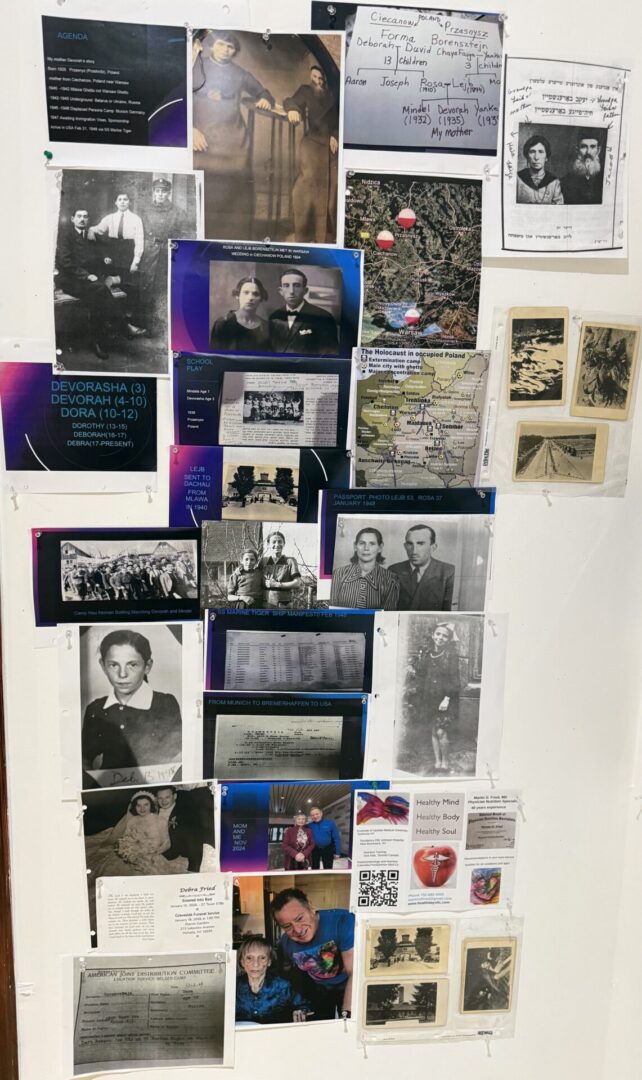
My mother was born in 1935 in Przasnysz (proshnitz) Poland. Her parents were Lejb (Leib or Layb) Borenstein and Rosa Forma. Rosa was the youngest of approximately 13 children born to Orthodox parents Duvid Forma and Deborah Glass from Ciechanow Poland (picture 1) which is near Warsaw. Rosa's older brother was Joseph Forma. You can see a picture of Rosa in the middle and Joseph to her right when they were in Ciechanow (2). Joseph came to the United States before World War 2 and became a naturalized citizen in 1933. Leib's parents were Chaya Faiga and Yaakov Borenstein (3) from Proshnitz Poland.
Leib was born in 1894 and Rosa was born in 1910. She was 14 and he was 30 when they met in Warsaw and the same age when they were married in Ciecanow. (4)
Leib was a Zionist and emigrated with Rosa to Palestine about 1924 against the wishes of her parents. (5)
Once in Palestine, they worked on an orange grove in the city of HOLON. During their time in Palestine, Rosa contracted malaria due to the poor sewage and large amount of mosquitoes. Her family urged her to come back to Poland for treatment and she and her husband returned to proshnitz about 1930. In 1932, their first child Mindel was born and my mother, Deborah was born in 1935. My mother is named after her maternal grandmother Deborah who died of pneumonia while traveling from Ciecanow to Proshnitz.
There is a picture of Devorasha and Mindel in a school play (6) in przasnysz Poland in early 1939 before the outbreak of World War II. You can see from the map how close both przasnysz and Ciecanow were to Mlawa as opposed to Warsaw (7). You can also see the division of Poland between the Germans and the Russians at the outset of the war in 1939.(8) a third child named YANKEL was born in Proshnitz in 1939 or 1940 before the establishment of the Mlawa ghetto.
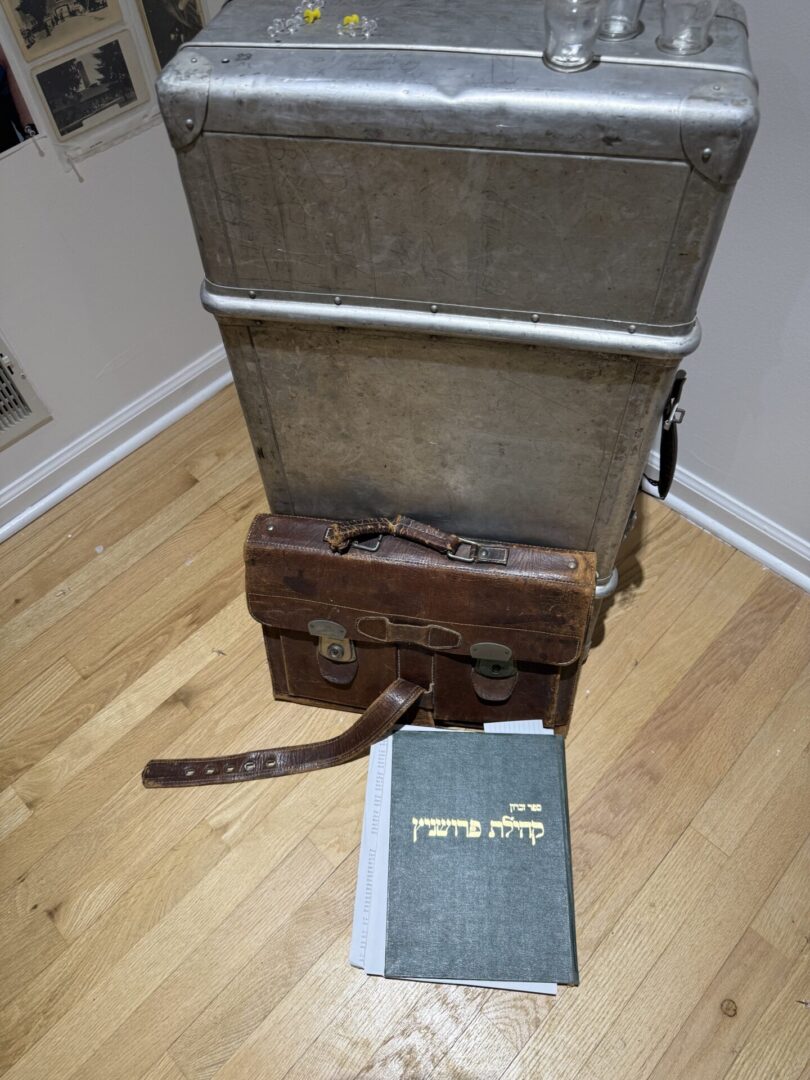
By 1940, The five Borenstein's were in the Mlawa ghetto. grandpa LEIB was aken from the ghetto and transported in or around Dachau in order to make mmunitions for the German war effort. When the Mlawa ghetto was emptied in 1942 most of the inhabitants were sent to the concentration camp auschwitz. Prior to his departure to Dachau, Leib forgave a loan from a German who had been living in Przasnysz from the time Hitler came to power. This German owed Leib money on account for goods purchased. Leib gave him at additional money before being transported to Dachau which is in south east of Germany. When the Mlawa ghetto was being dissolved the Germans were shooting at Jews and shot Yankel in Rosa's arms and he died, however the same German that owed Leib money saw that, Rosa, Mindel and Deborah were transferred by cattle car either to the Ukraine or Belarus, where they spent the next four years underground pretty much in a ditch being hidden. At the outset of the trip Deborah recalls them closing the cattle car on her neck. They were hid on a farm in a ditch covered with hay and Rosa would go out at night wearing a cross around her neck while gathering food such as potatoes from the field to feed the family. My mother recalls being bitten by rats while in a hole in the ditch and using urine as an antiseptic on the wounds. Leib continued to work making ammunitions for the German war machine. Leib was liberated from Dachau on April 29,1945 by the US Army. He reunited with the rest of his family and attempted to go to their home in Przasnysz but the Polish people who were occupying their homes, threatened to kill them and would not give them back their home. In the middle of the night with just one aluminum suitcase and a leather backpack, the family made their way to the American occupied part of Germany and ended up with only one piece of luggage and a backpack which they took to a displaced person camp neu freiman Soilling in Munich in 1946. In order to cross over from one part of Germany to the displaced person camp, they had to pass an armed guard at the checkpoint. My mother recalls the guard pointing a gun at her. She was 9 years old and carrying whatever personal valuable possessions they had in the small backpack that she had and when he pointed the gun at her, she raised her arms up in surrender, and he thought that that was cute and funny and allowed them to pass. Deborah (Dora) recalls meeting general Eisenhower, who displaced the Germans from the residential buildings that Hitler had built for his soldiers in Munich, in order to make way for displaced persons in this camp. You have a picture of Deborah and Mindel marching in the camp that they stayed in for two years and a picture of Deborah at age 11-12 as well of a picture of Deborah and Mindel as sisters in the displaced person camp between 1946 and 1947.
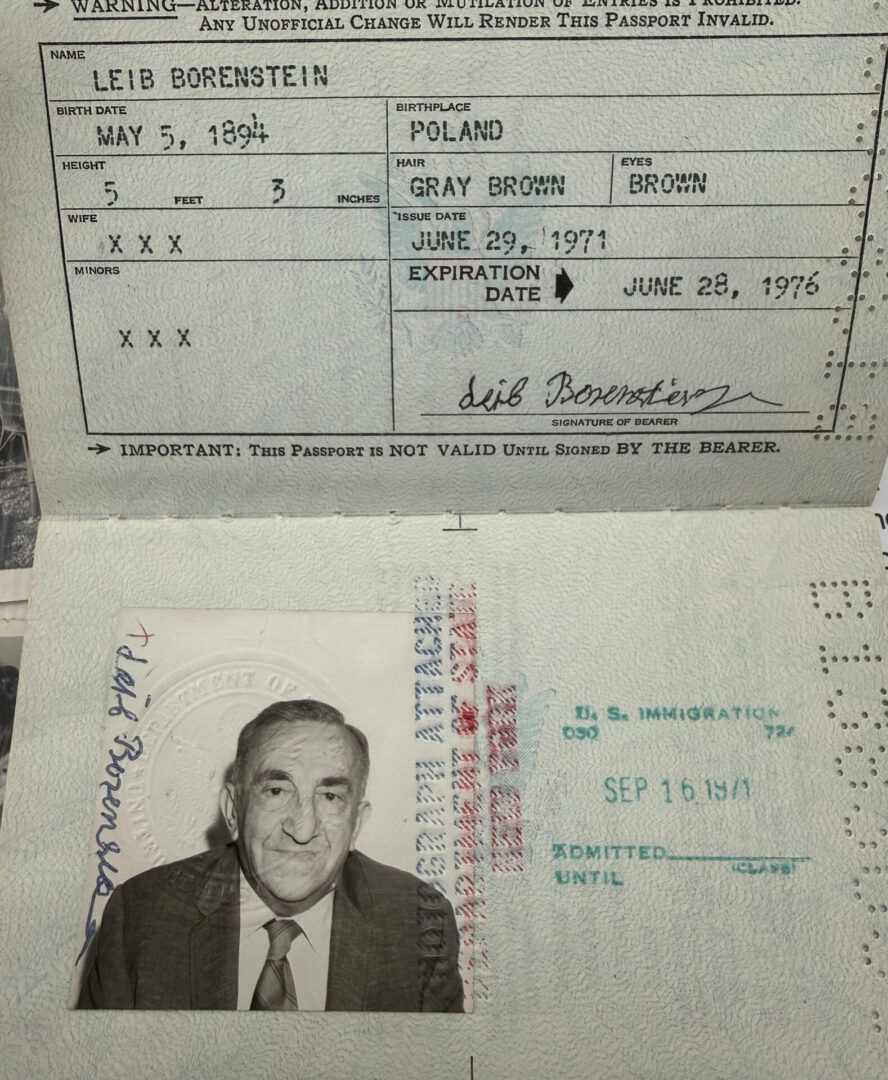
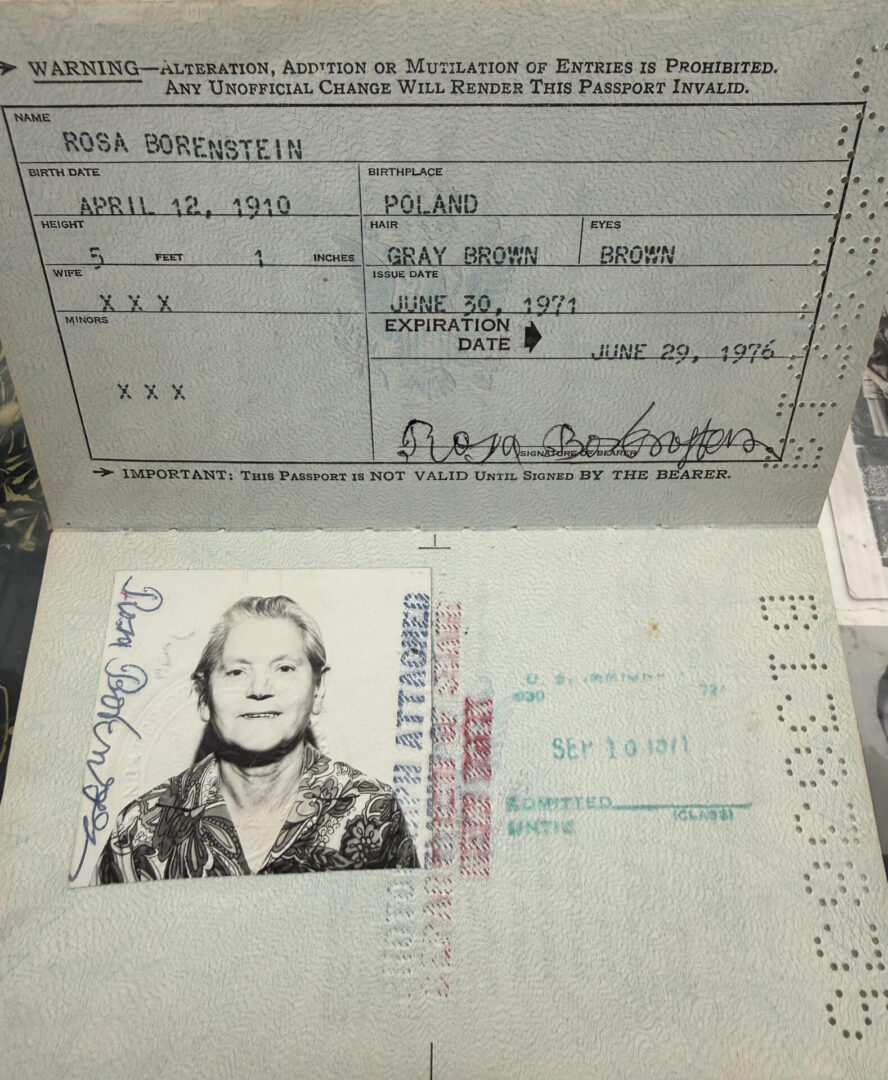
While in the displaced person camp, Leib was in contact with Rosa's older brother Joseph Forman (Forma) who was living on Ward Avenue in the Bronx of New York as evidenced by the documentation from the Hebrew immigration aid Society (HIAS). At first in May 1946 Joseph had provided the $850 for transportation $15,000-$20,000 (today) for the Borensteins to come to the United States. Affidavits were received by August 1946 in the application for immigration visas that was submitted in May 1946. Subsequent correspondence shows that Joseph asked for the money back because he needed it as written in the letter dated July 30, 1947. A letter earlier in the year on March 28, 1947 from the American consulate to Joseph Forman indicated that the Borenstein's are in waiting for the availability of the Polish quota numbers for immigration visas The next picture is the passport picture of Rosa and Leib Borenstein around January 1948. Rosa would be 37 years old and Leib was 53. In order to get into the United States they had to be guaranteed that they would have a job and you see the international refugee organization displayed person professional testing board certificate number 56 attesting that Leib Borenstein was a house painter with 15 years experience, They traveled from Munich to Bremen then Bremerhaffen where they boarded the SS marine Tiger in Feb 10 1948. The ship manifest lists Rosa and Lejb Borensztejn and Mindel and Dora(age 12). They left Germany on February 10, 1948 and arrived 11 days later on February 21, 1948.
My mother was seasick from the ride and while everyone else was admiring the Statue of Liberty, my mother told her mother that she wanted to go overboard and did not want to go to the USA. Joseph met them at the port in NEW YORK where the disembarked.
Once in the USA, Rosa was set up in a tailor shop on aldus street in the Bronx while Leib worked in Manhattan in the garment District making hats. Both had jobs within two months of arriving in the United States and paid back to HIAS the amount of money lent to them for transportation to the United States. They went to night school to learn English but only spoke Yiddish in the home.
They all became naturalized citizens seven years later in 1955. My mother, Debra got married at age 17 and had my sister at age 19 and me at age 21, my mother attended Hunter College, where she got a degree in Hebrew studies and education, and she often taught in Hebrew school and/elementary school, as well as working as an accountant
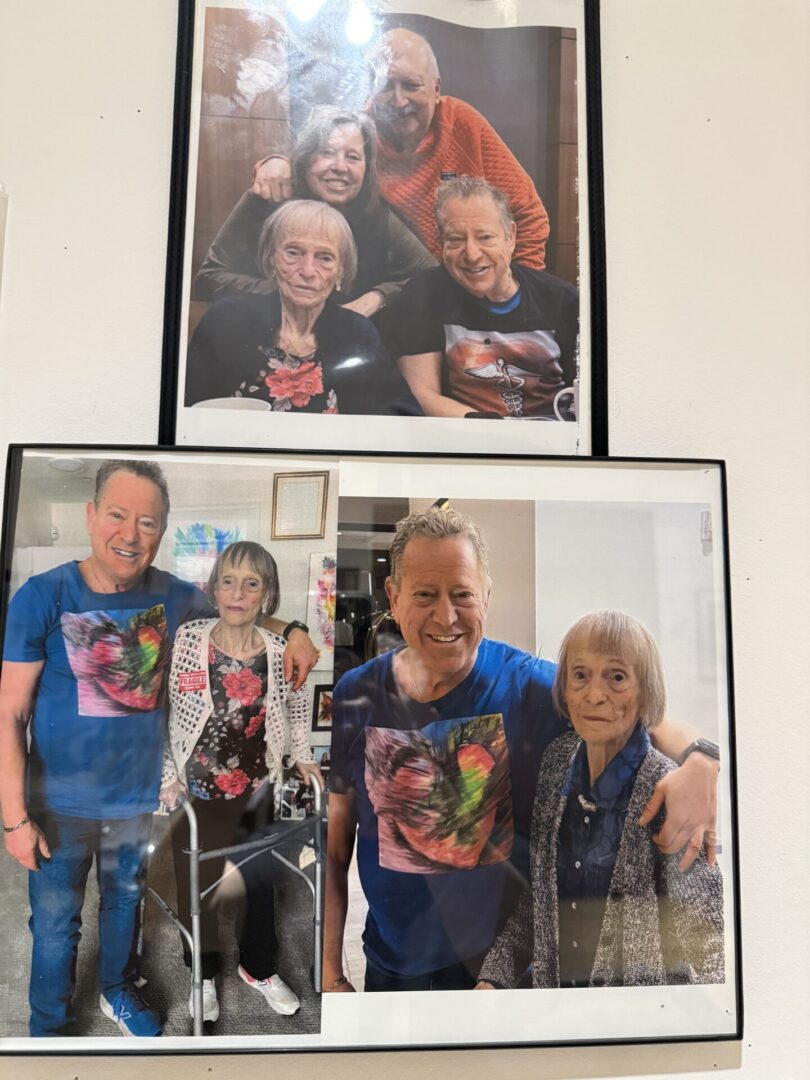
The last picture was taken of my mother, Debra Fried (Nee Borenstein) and myself. She lived independently in a residential facility with Knew about 90 other people in Chestnut Hill Massachusetts and knew each and everyone of them and their stories and shares her stories with them as well.
She was a proud grandmother and great grandmother of five great grandchildren. She always looked forward to spending time with the family. I am available upon request to talk about her experience as a holocaust survivor. She passed away peacefully on January 15, 2026. I am grateful to have gotten her oral testimony prior to her passing. She is survived by two children, two grandchildren and 5 great grandchildren.
Martin Daniel Fried, MD martindfried@gmail.com Mobile 732-682-3425
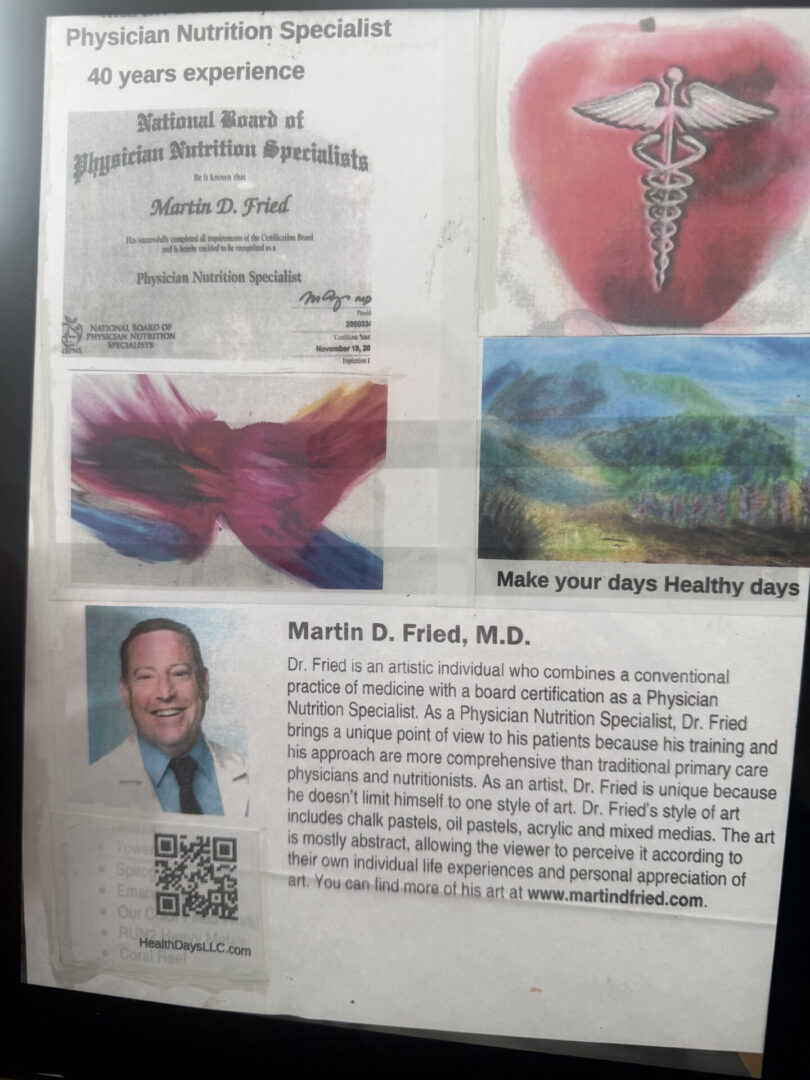
Martin D. Fried, M.D.
Dr. Fried is an artistic individual who combines a conventional practice of medicine with a board certification as a Physician Nutrition Specialist. As a Physician Nutrition Specialist, Dr. Fried brings a unique point of view to his patients because his training and his approach are more comprehensive than traditional primary care physicians and nutritionists. As an artist, Dr. Fried is unique because he doesn't limit himself to one style of art. Dr. Fried's style of art includes chalk pastels, oil pastels, acrylic and mixed medias. The art is mostly abstract, allowing the viewer to perceive it according to their own individual life experiences and personal appreciation of art. You can find more of his art at www.martindfried.com.